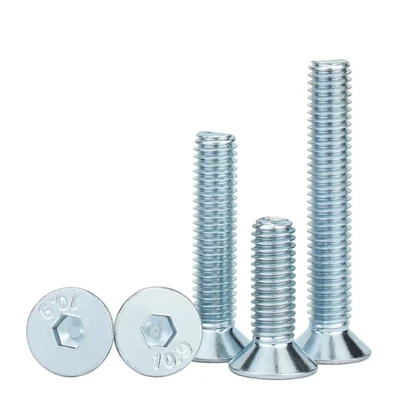
Flat washer, Spring washer, Square washer. They are all washers. But their engineering functions are worlds apart. Pick the wrong one – or worse, install it in the wrong order – and you're looking at leaks, downtime, or even equipment failure.
Let's break down all three in plain language – so you never make that mistake again.
1-Minute Comparison Table
| Type | Core Function | When to Use | One Rule to Remember |
|---|---|---|---|
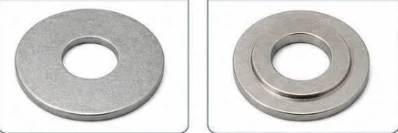
| Flat Washer | Distributes load; protects surface | Aluminum, plastic, thin-wall connections | Prevent indentation |
| Spring Washer | Prevents vibration loosening | Engines, compressors, conveyors | Prevent loosening |
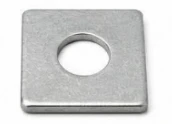
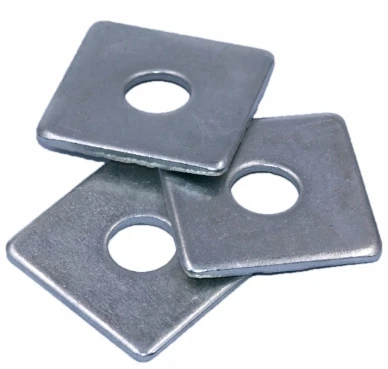
| Square Washer | Prevents rotation; for wood structures | Wooden crates, timber molds, railway sleepers | Prevent rotation |
-
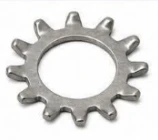
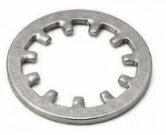
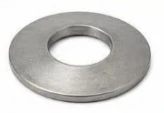
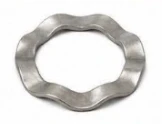
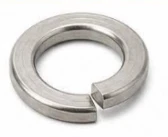
Function: Uses elastic rebound to prevent vibration-induced loosening.
Note: Does NOT carry load – anti-loosening only. When fully compressed flat, its job is done.
Trend: High-end EU/US clients increasingly prefer "flat washer + thread-locker" to avoid stress relaxation and eccentric loading. -
Square Washer – The Anti-Rotation Anchor for Wood
The Correct "Stacking Order" for Flat & Spring Washers
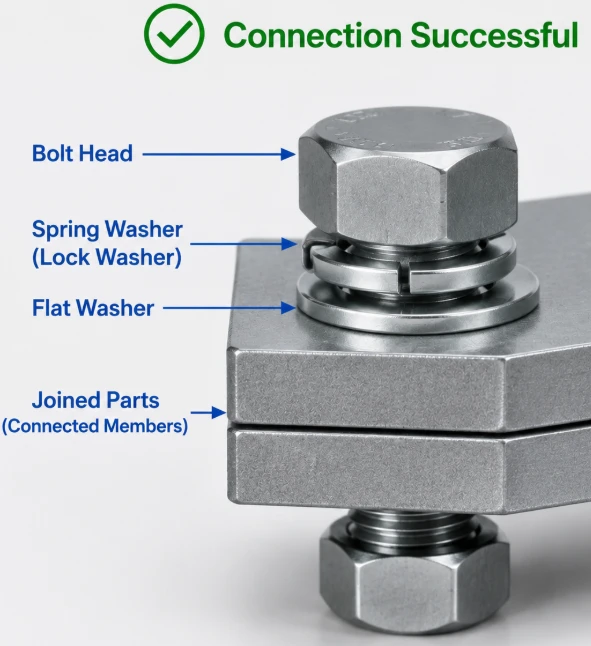
Bolt Head → Spring Washer → Flat Washer → Workpiece, do you know why?
The spring washer sits close to the bolt head, directly transmitting elastic compensation force to the bolt shank – maximizing anti-loosening effect
The flat washer sits against the workpiece surface, protecting soft substrates from being scratched by the split edges of the spring washer, while also distributing the clamping load
HS Codes & Practical Buying Tips:
| Product | HS Code | Notes |
|---|---|---|
| Spring washer | 7318.21.0000 | Spring washers & lock washers |
| Other washers | 7318.22.0000 | Flat washers, square washers, etc. |

-
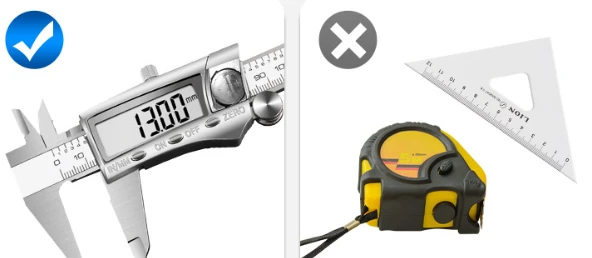
Dimensional tolerance is the first quality gate – always perform incoming inspection on ID, OD, and thickness. Many "cheap" washers are 0.1mm under-thickness, which can throw off torque readings during assembly.
-
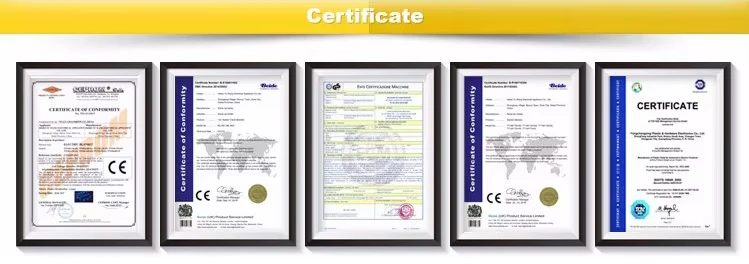
For stainless steel, always request PMI (Positive Material Identification) test reports – 201 stainless steel looks nearly identical to 304 but offers far less corrosion resistance.
-
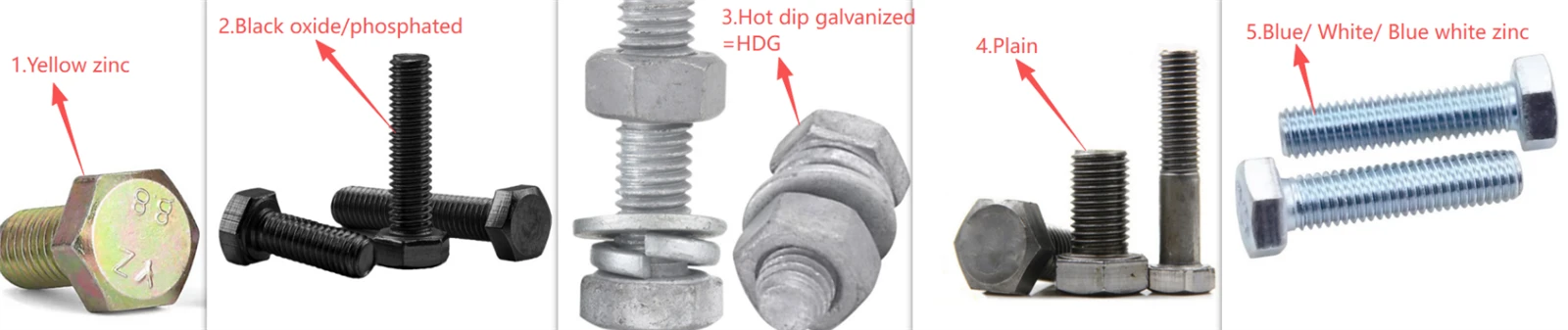
Surface treatment compliance matters – For EU exports, zinc plating must meet REACH requirements; for California exports, Prop 65 compliance is relevant.
-
Put the standard code on every order line – don't just write "Flat Washer M8." Write "Flat Washer M8 – DIN 125 – A2 Stainless Steel."
-
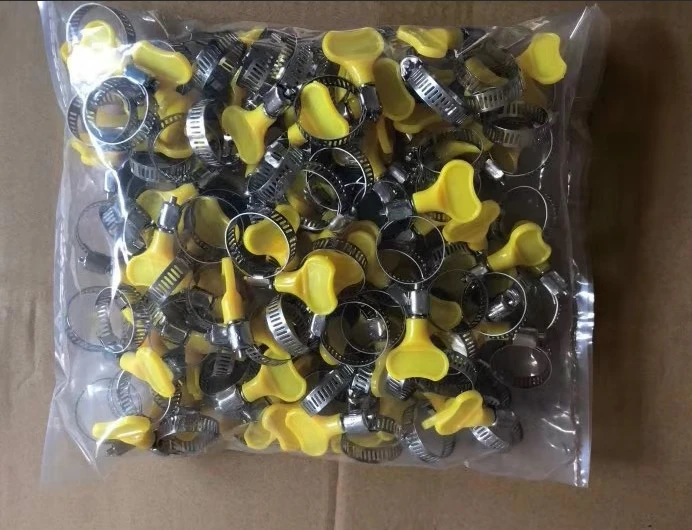
Packaging affects your landed cost – washers are high-weight, low-unit-value items. Bulk packaging minimizes freight, but ensure proper rust-preventive packaging .
-

This article was authored by our engineering team with 15+ years of experience in the fastener industry. Technical data references DIN/ANSI/ISO standards. Procurement recommendations are based on practical export experience across multiple countries.
Welcome to contact us for samples or technical drawing support. We offer a full range of washer products and can customize non-standard sizes per customer drawings.