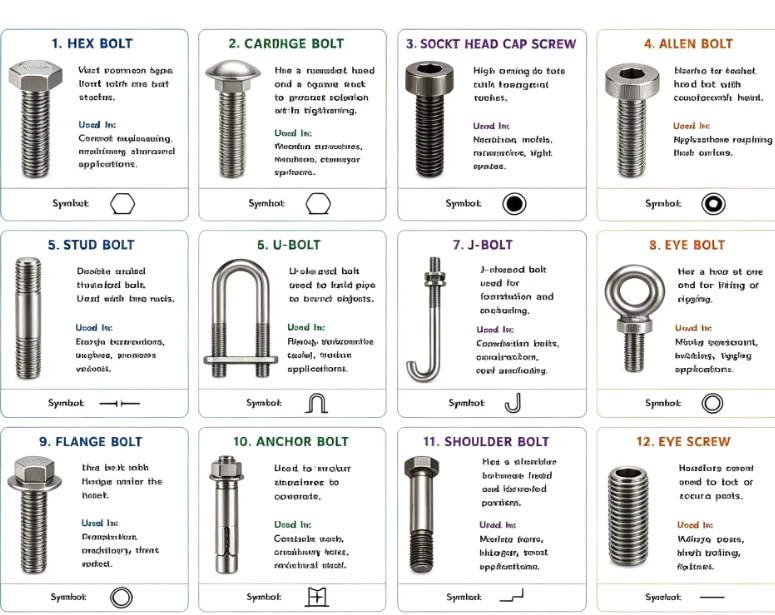
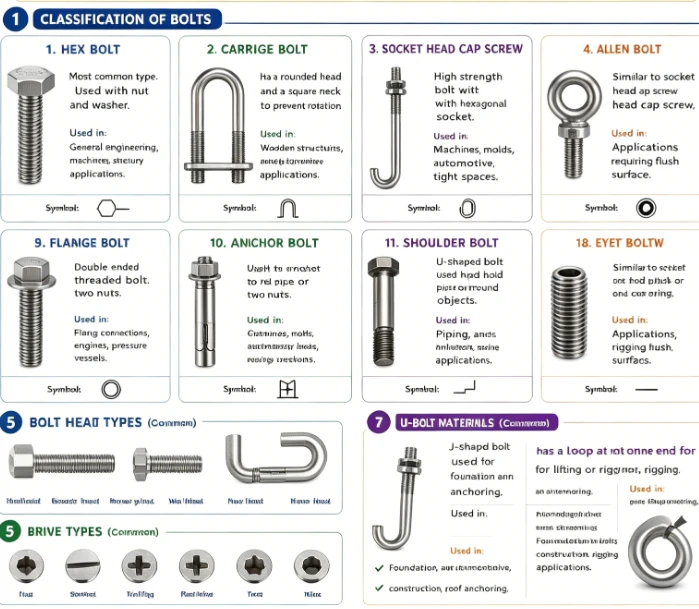
When specifying bolts for machinery, construction, automotive, electronics or steel structure projects, many buyers focus on thread size, material grade and load capacity, but often overlook bolt head design. The head type affects torque transfer, tool compatibility, installation space, surface protection and overall assembly reliability, making it an important part of fastener selection.
**Hex Head** is one of the most widely used types, offering a large bearing surface and stable torque transfer. It is easy to tighten with standard wrenches or sockets, making it suitable for general assembly, structural connections and heavy-duty machinery. Its simple geometry also helps reduce slipping during installation.
**Socket Head** features an internal hexagonal drive, usually tightened with an Allen key. It is ideal for compact spaces where external wrenches cannot rotate freely. This type allows relatively high torque control and is common in mold assembly, machine tools and precision equipment.
**Pan Head** has a rounded top and a flat bearing surface, providing a neat appearance without protruding too much. It is often used in low-profile applications, electrical enclosures, consumer appliances and light machinery, where both aesthetics and sufficient clamping force are required.
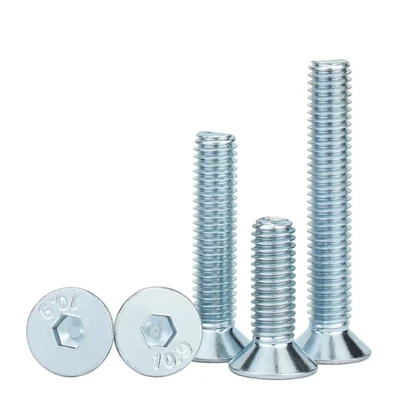
**Countersunk Head** is designed to sit flush with or below the workpiece surface. It is especially useful when a smooth finish, low wind resistance or reduced protrusion is needed. It is widely found in sheet metal, furniture assembly, aerospace components and equipment covers.
**Flange Head** integrates a washer-like flange under the head, which distributes pressure over a larger area. This design reduces surface indentation and improves resistance to loosening under vibration. It is frequently used in automotive systems, engines, pipelines and heavy equipment.
**Torx Head** uses a six-lobed drive system that improves tool engagement and reduces cam-out. It allows more consistent torque application, especially in automated assembly lines. This head type is popular in electronics, automotive components and precision manufacturing.
Selecting the right bolt head type depends on available space, required torque, drive tool, material surface and assembly method. Understanding these basic designs helps buyers make faster, more reliable fastener decisions.