1. Forming Mechanisms – What Happens Inside the Metal
Cut Threads (Material Removal)
Whether turned, milled, or tapped, cutting physically peels away material. This gives unmatched dimensional flexibility and precision, but the process severs the metal's grain flow. The exposed grain boundaries at the thread root, combined with microscopic tool marks, become stress raisers. Under repeated cyclic loads, these points are where fatigue cracks typically start.
Rolled Threads (Plastic Flow)
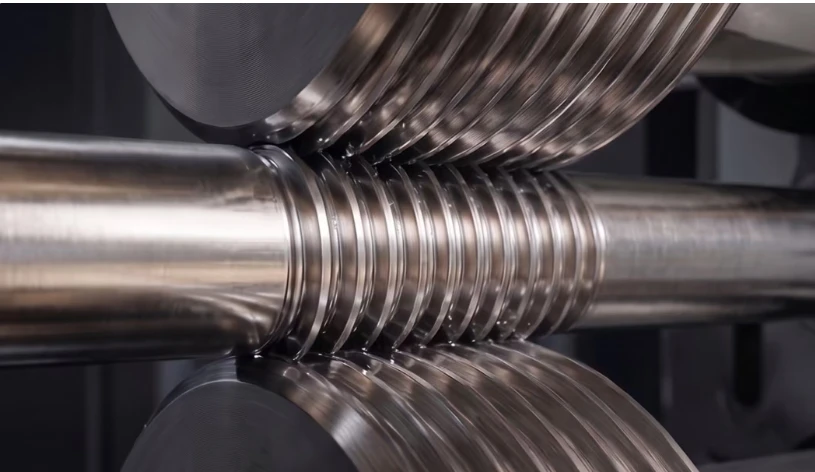
Rolling does not remove any material. Instead, high‑pressure dies (flat or cylindrical) force the metal to plastically flow into the die cavity, forming the thread profile. This cold‑working process brings three distinct benefits:
- Continuous grain flow – the grain structure follows the thread contour without being cut, eliminating internal notches.
- Work hardening and densification – the surface layer becomes denser and harder, boosting tensile strength.
- Beneficial compressive residual stress – the squeezing action leaves a compressive layer that counters external tensile stresses during service, significantly delaying fatigue crack initiation.
2. Where Rolling Excels – and Where It Falls Short
Advantages of Rolling
- Superior fatigue resistance and vibration endurance.
- Smoother surface finish (die‑burnished) with consistent quality.
- No material waste – cost‑effective for medium to large production runs.
Limitations (Why Rolling Isn't Always the Answer)
- Material dependency – rolling requires good ductility. Brittle materials (e.g., some cast irons or high‑hardness alloys) may crack during the process.
- Tooling cost – specialized dies are expensive. For small batches, prototype runs, or non‑standard sizes, the die amortization is often prohibitive.
- Size constraints – very large diameters or deep internal threads are difficult or impossible to roll due to equipment tonnage and stroke limits.
3. When Cutting Remains Irreplaceable
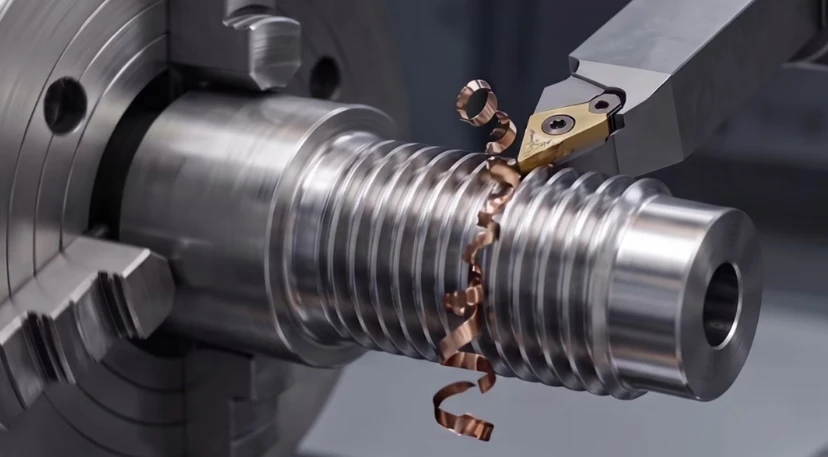
Despite rolling's strength advantages, cutting is still the go to for:
- Extreme precision – machine tool leadscrews, measuring instruments, and components that demand micron‑level pitch accuracy and ultra‑tight tolerances (especially when combined with grinding).
- Custom and one‑off parts – no dies needed; just reprogram the CNC. Ideal for R&D samples, special thread forms, oversized pitches, or unusual geometries.
4. Quick Selection Guide (At a Glance)
| Evaluation Aspect | Cut Threads (Subtractive) | Rolled Threads (Plastic Flow) |
|---|---|---|
| Grain flow | Disrupted – microscopic notches at the root | Continuous – dense, follows thread contour |
| Surface stress | Often tensile or neutral – risk of stress concentration | Deep compressive residual stress + work‑hardened layer |
| Fatigue life | Baseline – sensitive to cyclic loads | Significantly enhanced – excellent anti‑vibration performance |
| Surface finish | Dependent on tool wear and cutting parameters | Smooth, burnished by the dies |
| Precision capability | Very high (can reach micron levels with grinding) | Good, but usually not for ultra‑tight tolerances |
| Material suitability | Wide range – including hard, brittle, or tough‑to‑machine alloys | Limited to materials with good ductility and elongation |
| Cost efficiency | Best for small batches, prototyping, or non‑standard sizes | Most economical for medium‑to‑large series (zero material waste) |
| Typical applications | Lead screws, precision adjustment parts, custom samples | High‑strength fasteners, automotive chassis bolts, wind turbine anchors |
Final Takeaway
Don't judge a thread by its process name. Cutting offers unmatched flexibility and precision, while rolling delivers superior strength and fatigue performance – each has its place. For critical safety‑related bolted joints under dynamic loads, rolled threads are often the smarter choice. For one‑off prototypes or ultra‑precision mechanisms, cutting remains king. The key is matching the process to the real service conditions, not to outdated preconceptions.