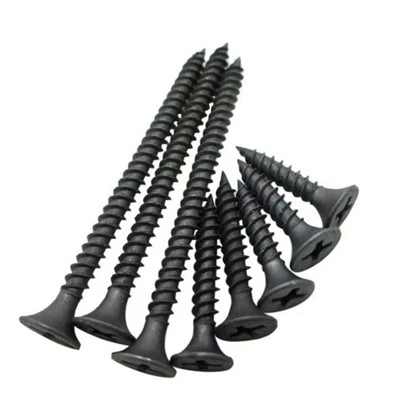
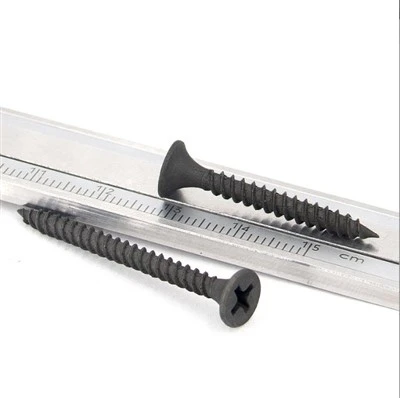
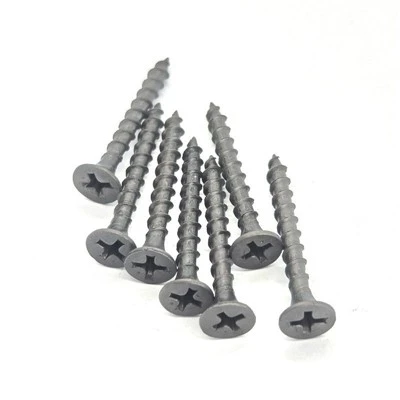
A bolt is a fastener consisting of a head and a threaded shank (a cylindrical body with external threads). It requires a nut and is used to connect two parts with through holes, providing a detachable connection.
It is widely used in machinery, construction, electronics, transportation, and other fields, and is often referred to as the "rice of industry," highlighting its fundamental and important role in industry. Bolt connections are mainly divided into ordinary bolt connections and high-strength bolt connections. High-strength bolts can be further divided into friction type and bearing type.
Key characteristics include:
Structural Composition: Consists of a head and a shank. Common head types include hexagonal head, countersunk head, and round head. The shank has external threads, and some bolts have a smooth section or a narrow waist design.
Detachability: The connecting parts can be separated by unscrewing the nut, facilitating installation and maintenance.
Performance Grade Classification: Bolts are classified into several strength grades, such as 4.8, 8.8, and 10.9. Bolts grade 8.8 and above are high-strength bolts, typically made of alloy steel and heat-treated; bolts below grade 8.8 are ordinary bolts.
Diverse Materials: Commonly used materials include carbon steel (such as Q235, 45 steel), alloy steel (such as 40Cr, 35CrMo), and stainless steel (such as 304, 316). Material selection requires comprehensive consideration of strength, corrosion resistance, temperature environment, and cost.
Anti-loosening Design: To prevent loosening due to vibration, some bolts have holes in the head or shank for use with cotter pins, or spring washers, self-locking nuts, etc., to enhance the tightening effect.